
Are your students guessing… instead of knowing if their answers make sense?
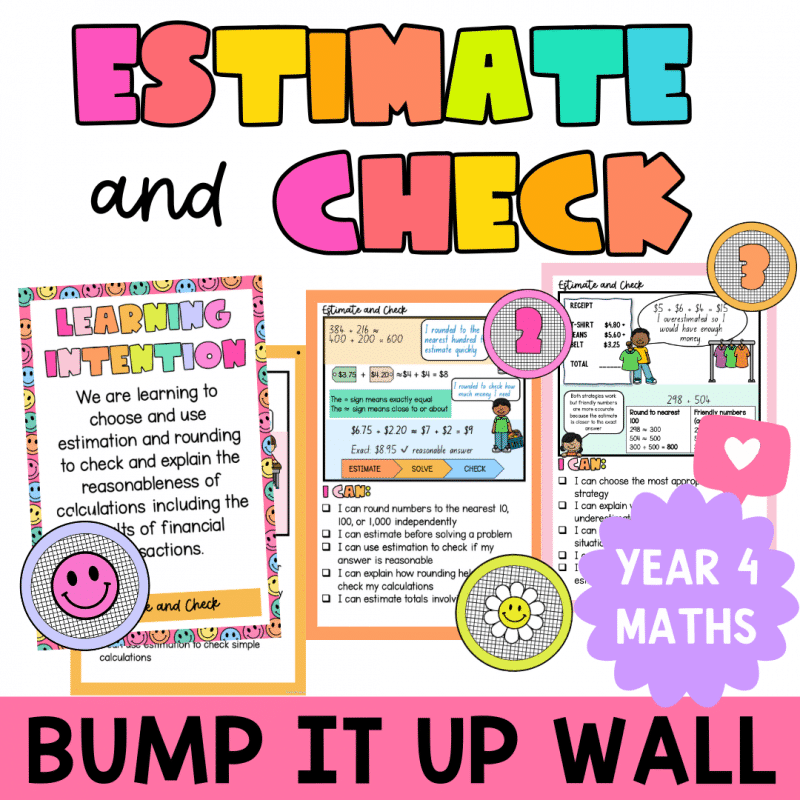
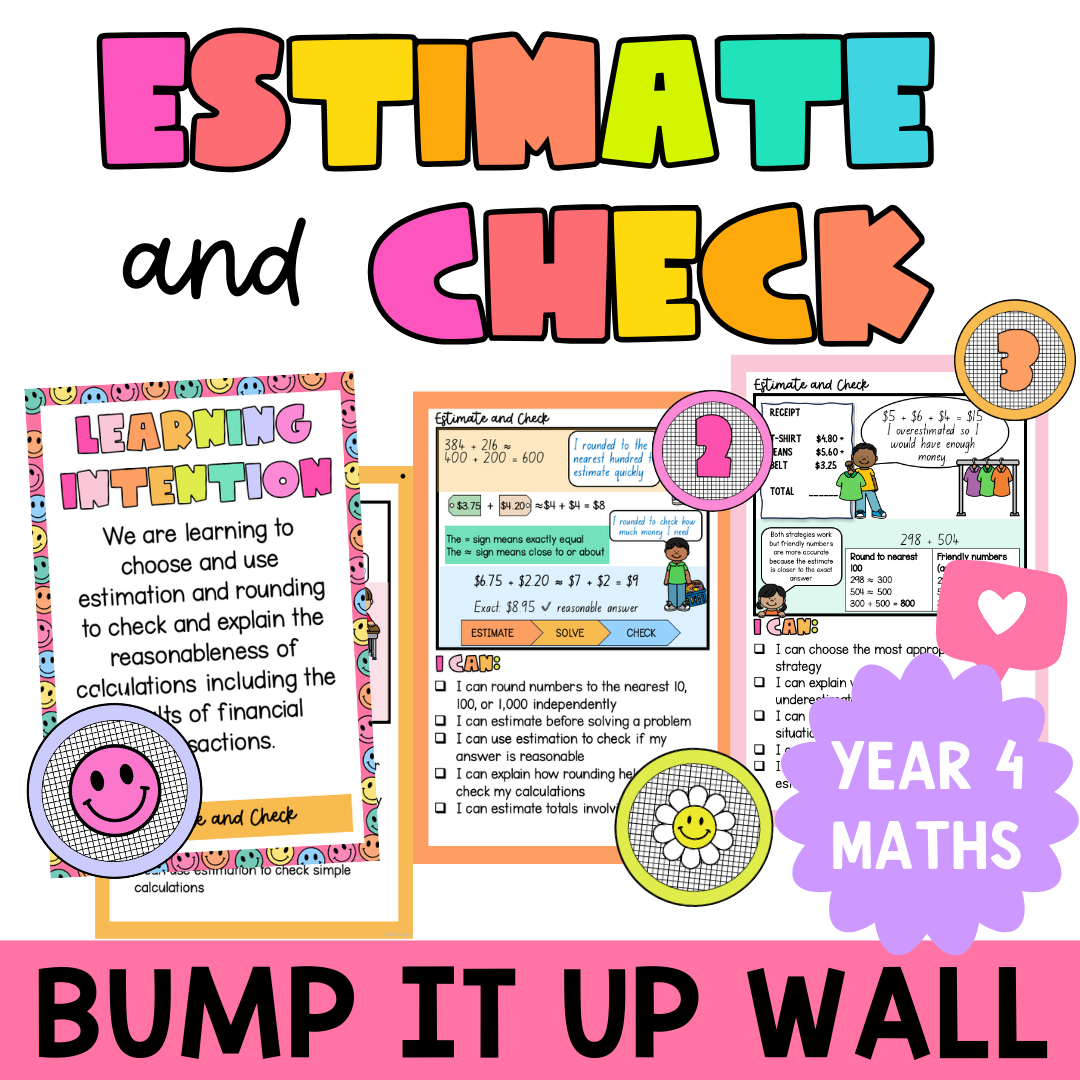
This Year 4 Maths Bump It Up Wall helps students confidently use estimation and rounding to check the reasonableness of their calculations — including real-world financial transactions.
Using clear, levelled examples, students can see what success looks like, understand how to improve, and take ownership of their learning.
💛 What’s Included
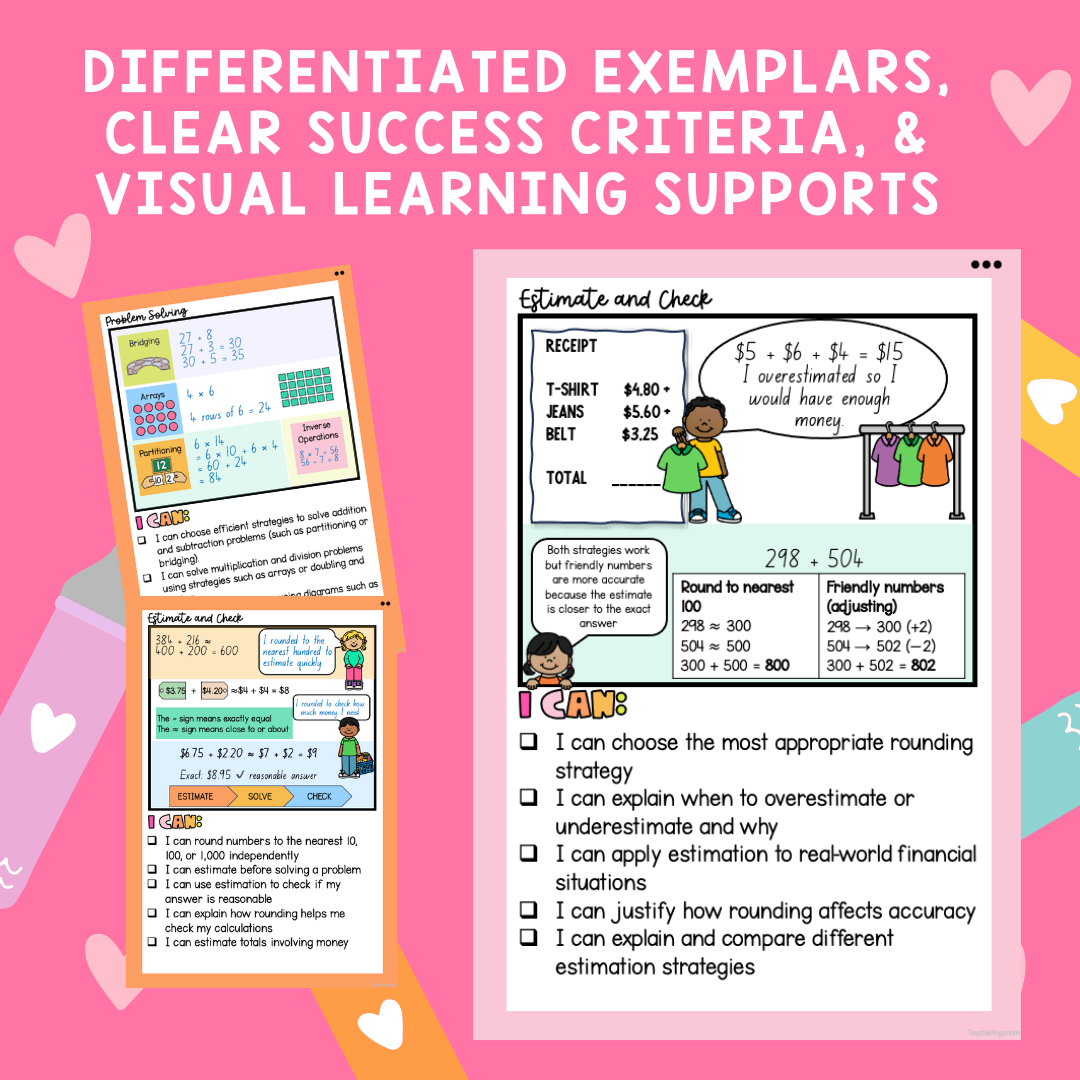
✔ 3 clearly levelled examples (Working Towards, At Standard, Above Standard)
✔ Student-friendly success criteria for each level
✔ Visual models showing estimation, rounding, and checking strategies
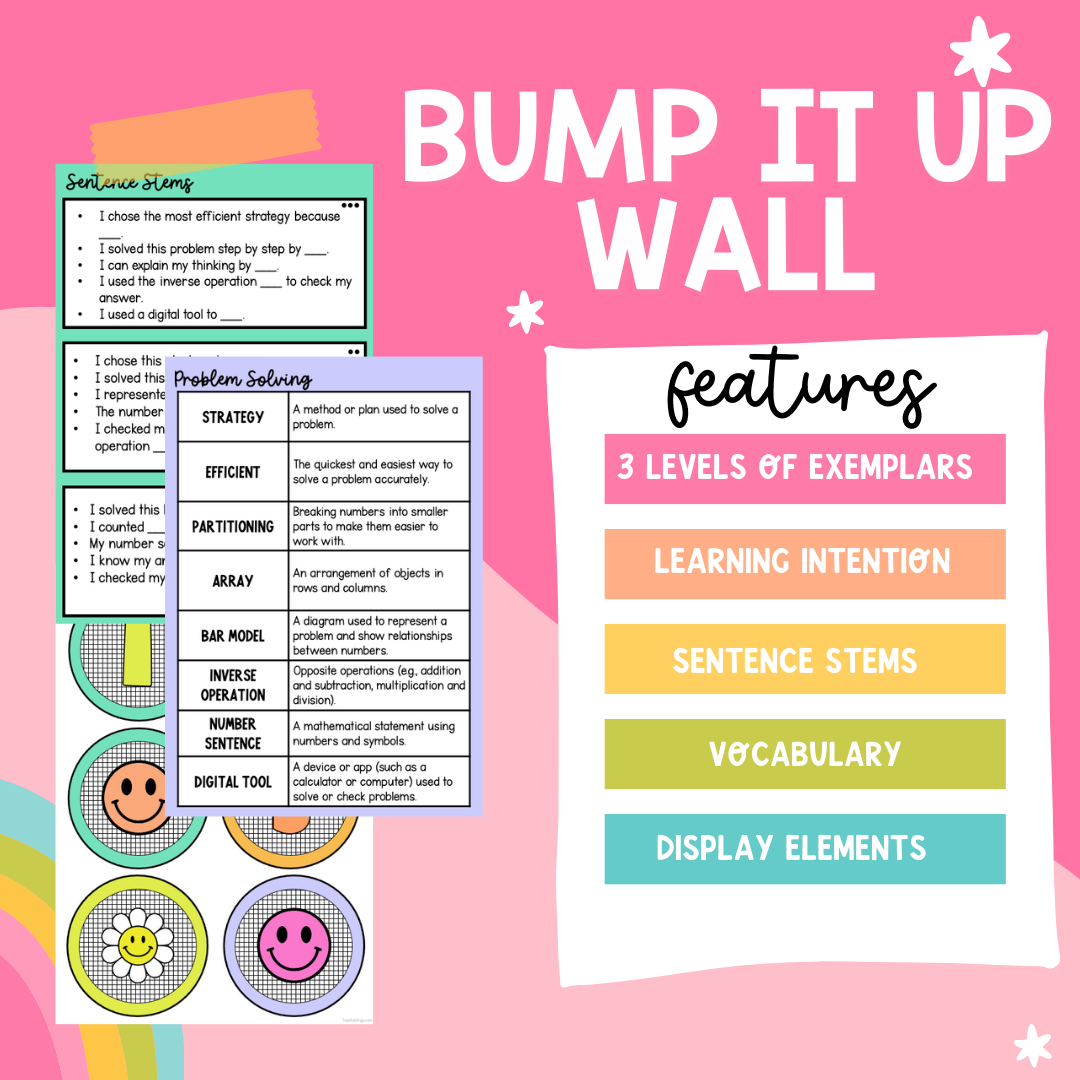
✔ Sentence stems to support mathematical explanations
✔ Maths vocabulary cards with simple definitions
✔ Strategy anchor prompts to guide student thinking
🎯 Learning Focus
This resource supports students to:
• Estimate and round numbers to check if answers are reasonable
• Round to the nearest 10, 100, and 1,000
• Apply estimation to addition and financial contexts
• Explain how rounding affects accuracy
• Use overestimating and underestimating in real-life situations (e.g. budgeting)
• Justify their thinking using mathematical language
🧠 Flexible Learning Target Options
This resource includes editable headings so you can match your school language:
• Learning Intention
• Learning Target
• Learning Goal
• Learning Objective
👀 Why Teachers Love Bump It Up Walls
✔ Makes success criteria visible and easy to understand
✔ Supports differentiation without extra planning
✔ Helps students self-assess and set goals
✔ Builds confidence in explaining mathematical thinking
✔ Perfect for whole-class display or small group teaching
🏫 Curriculum Alignment
Aligned with Australian Curriculum v9 (AC9M4N07)
Choose and use estimation and rounding to check and explain the reasonableness of calculations, including financial transactions.
✨ Perfect For
• Maths rotations
• Explicit teaching
• Small group instruction
• Intervention support
• Classroom displays that actually work
💡 Teacher Tip
Use this wall during your daily maths routine:
-
Estimate first
-
Solve
-
Check and explain
This simple structure builds strong mathematical reasoning over time.